
Davidic Worship
and the Tabernacle of David

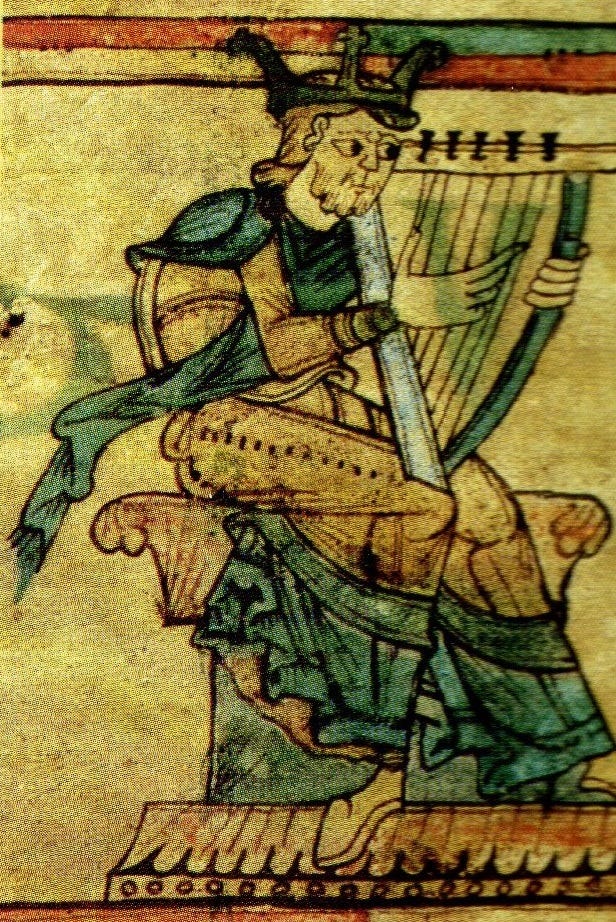
Over the past sixty years, many non-Catholic Christians have spoken of a revival of worship in our day, based on a pattern established by King David. This post tells where the theory of “Davidic worship” came from, what it entails, and how it has begun to influence Catholics.
Origin of the Idea
Previous posts (here and here) discussed how the Latter Rain Revival, (1947-48) spread “the belief that God’s manifested presence is dependent upon a certain order of worship involving singing in tongues, clapping, shouting, singing prophecies, and a new order of praise dancing.”1 Latter Rain teacher George Warnock, author of The Feast of Tabernacles, also wrote From Tent to Temple. There he tells how David wanted to pitch a tent for the Ark of the Covenant. God told him to pitch a tent in a new location, Mt. Zion, to signal the establishment of a new order of worship. Bill Hamon taught that true worship including “the prophetic presbytery, singing praises, and melodious worship” was restored within the Latter Rain movement in the 1950s. In the 1960s, Graham Truscott, in New Zealand, and Kevin Conner, in Australia, further developed Latter Rain ideas about the Tabernacle of David and Davidic worship.
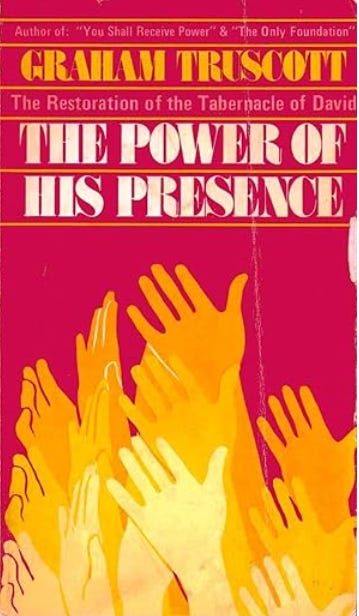
By the early 1990s, a clear restorationist teaching had emerged:
The restoration of the pattern of praise and worship that once prevailed in King David’s day will release a prophetic stream of praise in our day that will energize the church with new power and demolish the works of Satan. Believers will approach God in new ways such as singing in tongues to activate revelations, prophesying in song, dancing rhythmically in the Spirit and all the traditional charismatic methods (hand clapping, raising of hands etc.).2
Mike Bickle and IHOPKC
A full theory of Davidic worship and an influential congregation to model it were provided by Mike Bickle, founder of the International House of Prayer in Kansas City (IHOPKC). In the Vineyard Fellowship Bickle had met the Kansas City Prophets, Paul Cain and Bob Jones. Jones had visions about the restoration of worship, tied to an “end-time revival” and a worship movement in Kansas City:
The Lord said, “I want you to go back to touch a few young leaders of a coming movement in Kansas City who will reveal Me to the nations. … I will raise up many young people across the nations who will be faithful to Me to the end. There is coming a third world war that will wake up many. I will bring over a billion souls to Myself at this time.” …An angel said, ‘The Lord will bring the first leaders of this movement to you, Bob. The anointing will be on prophetic singers and musicians. Many will come to Kansas City, because it will be a house of prophecy, called the house of prayer.”
In 1983, Jones told Bickle that he would “lead a worldwide youth movement of singers and musicians.” In 1999, Bickle founded the International House of Prayer, where unceasing worship has been offered since. The Global Prayer Room website notes, “We based the prayer room on King David's idea of creating a place where people pray to and worship God (1 Chronicles 9:33; 22–24).”
When teaching on Davidic worship, Bickle began with Psalm 132:
Lord, remember David and all his afflictions; How he swore to the Lord, and vowed to the Mighty One of Jacob: “Surely I will not go into the chamber of my house, or go up to the comfort of my bed; I will not give sleep to my eyes or slumber to my eyelids, until I find a place for the Lord, a dwelling place for the Mighty One of Jacob.” …Let us go into His tabernacle; Let us worship at His footstool. Arise, O Lord, to Your resting place, You and the ark of Your strength. (Ps 132:1-8 NKJV)
David vowed “to extravagantly pursue God,” and established a tabernacle staffed by many musicians who offered ceaseless worship. He saw by the Holy Spirit how worship is carried out in heaven and copied what he saw,3 establishing a new order of worship that reflected “the order of worship in heaven.” Bickle reckoned David spent 100 billion dollars of his own money to finance a worship ministry with 4,000 full-time paid musicians and 288 singers. This was the “kind of worship that moved the heart of God.”
Solomon continued Davidic worship in the temple he built:
And according to the order of David his father, he appointed the division of the priests for their service, the Levites for their duties (to praise and serve before the priests) as the duty of each day required, and the gatekeepers by their divisions at each gate; for so David the man of God had commanded (2 Chron. 8:14).
Davidic worship eventually ceased, but later kings restored it, beginning with Hezekiah:
And [Hezekiah] stationed the Levites in the house of the Lord with cymbals, with stringed instruments, and with harps, according to the commandment of David, of Gad the king’s seer, and of Nathan the prophet; for thus was the commandment of the Lord by His prophets” (2 Chron. 29:25).
Hezekiah was one of seven reformers raised up by God whenever Israel went astray “to establish worship on earth according to the pattern that David saw in heaven.” The lesson for today is clear. Revival and the restoration of Davidic worship go together. “The Church has been astray for many generations,” not worshiping as God commanded David, but now God is raising up reformers who will restore Davidic worship, and so bring heaven to earth.
While IHOPKC cut all ties with Mike Bickle following allegations of sexual misconduct, it remains committed to his teaching about worship:
Around 1000 BC, King David established a tabernacle in Jerusalem and set a precedent of night-and-day worship before the Lord... Each time this order of worship was reintroduced, spiritual breakthrough, deliverance, and military victory followed. Likewise, throughout the centuries, groups in Ireland, Germany, South Korea, and elsewhere across the globe have established day-and-night centers of prayer and worship. Following in this tradition, in 1999 the International House of Prayer started a prayer with worship meeting in Kansas City.
Other Promoters of Davidic Worship
Vincent Valentyn of South Africa, a “pioneer in the apostolic reformation,” presents a teaching nearly identical to Bickle’s. Steve Pruitt, a long-time worship leader, teaches about Davidic worship on his website, JustWorship.com, saying that God is restoring the tabernacle of David today, along with the kind of worship practiced there, as foretold by Amos:
On that day I will raise up the tabernacle of David, which has fallen down, and repair its damages; I will raise up its ruins, and rebuild it as in the days of old; That they may possess the remnant of Edom, and all the Gentiles who are called by my name, Says the Lord... Amos 9:11-12
Authors, musicians, and worship leaders promote Davidic worship with slogans like , “Dance Like David,” or “Worship Like David.” The publisher’s blurb for Rhoda Banks’ 2024 book offers the purported results of Davidic worship:
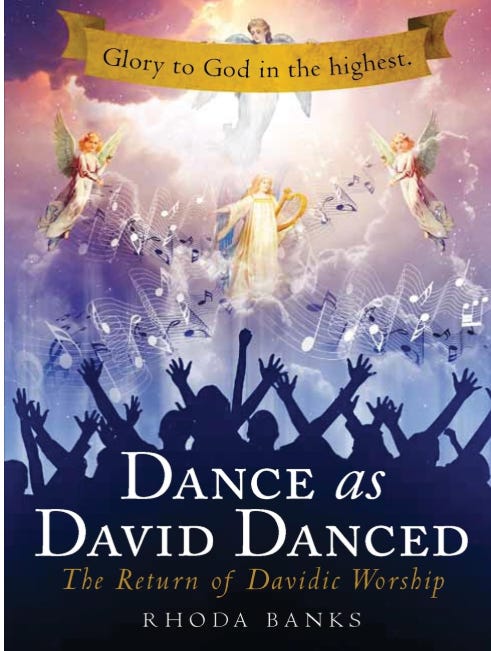
Rhoda Banks reveals how intimacy with God develops through worship. Worshipping "in spirit and truth" allows God's spirit to reign in powerful demonstrations of healing, deliverance, and great power. The church will see a shift in the spiritual climate as praise leads the way to overturn the enemy's plans. God is synchronizing heaven and earth at this time. Davidic worship emulates heavenly patterns of worship around the throne room. As heaven and earth align, a mighty outpouring of the spirit emerges. Revival fires are sparked, as we join with our heavenly hosts to draw on heavens resources to create an open heaven.
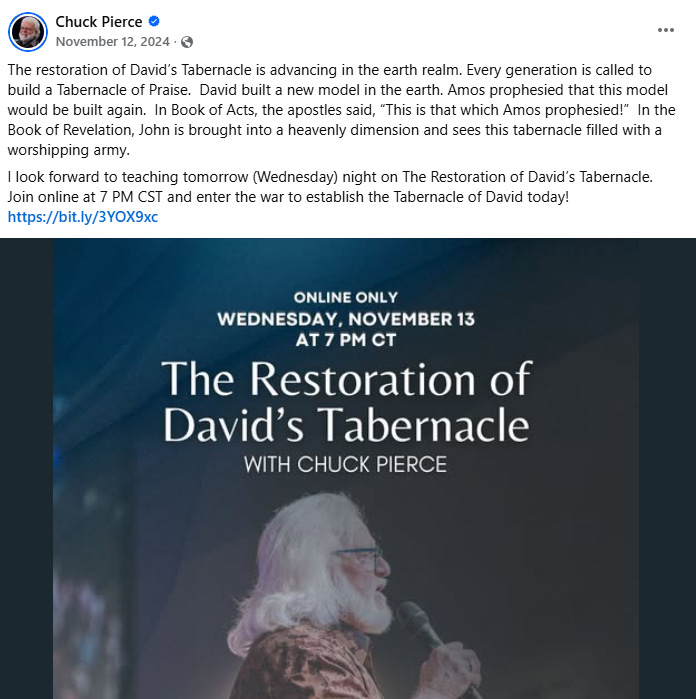
Chuck Pierce has been a leader in the New Apostolic Reformation since 1999, when he attended a meeting called by C. Peter Wagner, along with Rick Joyner, Cindy Jacobs, Dutch Sheets, and Mike Bickle. Pierce wants Christians to “enter the war to establish the Tabernacle of David today!”
The Book of Acts
Chuck Pierce appeals to the Acts of the Apostles, claiming “the apostles said, ‘This is what which Amos prophesied!’” Those words are not in the book of Acts. So, what is Pierce talking about?
Chapter 15 of Acts describes the Council of Jerusalem, a meeting of apostles and elders debating whether Gentiles could become Christians without being circumcised and required to keep the whole law of Moses. The Apostle James settled the debate, quoting the prophet Amos to show that God was calling believers from among the Gentiles, and that they could become full members of the Church without meeting these requirements:
After this I will return, and I will rebuild the tent of David that has fallen; I will rebuild its ruins, and I will restore it, that the remnant of mankind may seek the Lord, and all the Gentiles who are called by my name, says the Lord, who makes these things known from of old. Acts 15:16-18, citing Amos 9:11-12, ESV.
In the context of Acts, this text has nothing to do with establishing or reestablishing a certain order of worship. Rather, it is about God calling the Gentiles to become full members of his new people, the Church.
Catholics and Davidic Worship
Interest in the Tabernacle of David idea and Davidic worship has entered the Catholic Church. Dr. Dennis Holt was a long-time worship leader in the Catholic charismatic renewal in Arkansas. In 2015 he expressed his confidence in the restoration of Davidic worship, defending charismatics whose worship style was questioned by other Catholics, and citing Acts 15:16 to support his thesis:
Worship was designed by the Father to transform us from the natural realm to the supernatural realm where we meet with Him Face to face. The Charismatic Church, I believe, understands this to a point but we have so much further to go. Somehow, we have come to associate reverence with being quiet. This is not the Father’s view of reverence. Heaven is a noisy place. … Many Catholics see even raising hands at Mass as a distraction and disrespectful. People this must change. The Mass should be full of joy and celebration for what our Jesus has done for us… I want to encourage all of you Charismatics to stand strong in what you know is the truth. We have been promised by our Father that one day the Tabernacle of David will be rebuilt (Acts 15:16) and we will worship the Father the way He wants us to worship Him. David’s Tabernacle had worshipers twenty-four hours a day giving praise and worship to God.
The Encounter School of Ministry presents Davidic Worship, as part of its teaching on “intimacy with God.” The class content closely aligns with Bickle’s teaching, telling how David replaced a silent liturgy with music of praise. David led the people in dance, then introduced “an order of music,” employing over 10,000 people on his “full-time worship team.” Later kings “started revivals in worship” by restoring “Davidic worship.” A lesson is drawn for today:
…we believe the revival God has begun in our day and age is preceded by another restoration of Davidic worship: expressive, sacrificial worship with our whole body (Rom 12:1). This includes praise, dancing (Ps 149:3), lifting hands in praise (Ps 134:2); clapping, shouting and cries of joy (Ps 47:1); and spontaneous praise and singing (Ps 98:4).
The ESM Satellite Campus Resource appeals to the Catechism of the Catholic Church: “Full heart and body worship pleases God and so we respond to his pleasure! We give him what he desires and become good worshipers in the way he desires (CCC 2100).”
Does paragraph 2100 of the CCC support this teaching? No:
Outward sacrifice, to be genuine, must be the expression of spiritual sacrifice: "The sacrifice acceptable to God is a broken spirit. ... " The prophets of the Old Covenant often denounced sacrifices that were not from the heart or not coupled with love of neighbor. Jesus recalls the words of the prophet Hosea: "I desire mercy, and not sacrifice." The only perfect sacrifice is the one that Christ offered on the cross as a total offering to the Father's love and for our salvation. By uniting ourselves with his sacrifice we can make our lives a sacrifice to God.
This clearly has nothing to do with a revival of Davidic worship.
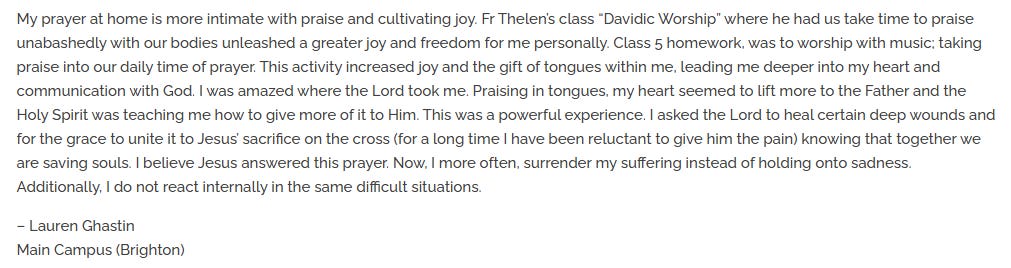
This testimony from an ESM student, instead of expressing a renewed understanding of the common worship of the Church, emphasizes an individual experience of joy and “communication with God.”
How Should Catholics Think about This?
The claim that God is now reviving the kind of worship he really wants assumes that Catholics, along with the Eastern Orthodox, Lutherans, Anglicans, and other liturgical worshipers, have for centuries failed to worship God as he desires, and that we are now in a season of revival during which Christians will finally start worshiping God correctly. This implies that participation in the sacred liturgy of the Church in the way that the Church proposes may be a failure to worship him “from the heart.” These claims fail on both historical and theological grounds.
The first Christians adapted Jewish worship, preserving specified days and times for prayer, a lectionary with pre-selected readings, hierarchically ordered worship, incense, and written prayers. They clearly did not feel obligated to “restore David worship” or establish 24/7/365 “praise.” Contemporary descriptions of the earliest Christian worship do not mention dancing, clapping, shouting, or spontaneous praise. Early sources offer no evidence of “expressive worship” as it is presented today. St. Cyprian of Carthage (d. 258) wrote:
When we pray, our words should be calm, modest and disciplined. Let us reflect that we are standing before God. We should please him both by our bodily posture and the manner of our speech. It is characteristic of the vulgar to shout and make a noise, not those who are modest… The same modesty and discipline should characterize our liturgical prayer as well. When we gather to celebrate the divine mysteries with God’s priest, we should not express our prayer in unruly words; the petition that should be made to God with moderation is not to be shouted out noisily and verbosely. For God hears our heart not our voice. He sees our thoughts; he is not to be shouted at.4
Catholics believe the Church's liturgy was established under the guidance of the Holy Spirit. Even liturgical silence, noted Pope Francis, “is a symbol of the presence and action of the Holy Spirit.”5 The Fathers of the Second Vatican Council taught that in the liturgy, “the work of our redemption is accomplished,” and that participation in the liturgy is “the primary and indispensable source from which the faithful are to derive the true Christian spirit.”6 Christians have the duty “to make known the worship of the one true religion which subsists in the Catholic and apostolic Church.”7 The liturgy of the Church, as it is officially constituted and practiced right now, expresses the truth about the mystery of Christ and the nature of the true Church. Those who sincerely participate in the liturgy can be certain that they are giving God the kind of worship he wants.
Conclusion
The earliest Christian teachers discussed the kind of worship God desires, citing the Old Testament. They did not refer to the Tabernacle of David, or to the prophet Amos, but to the prophet Malachi:
For from the rising of the sun to its setting my name is great among the nations, and in every place incense is offered to my name, and a pure offering; for my name is great among the nations, says the Lord of hosts. — Malachi 1:11
A document known as the Didache, dated to the first or second Christian century, gives instructions on how the Church should worship. No full-time worship team is mentioned.
On the Lord’s day, when you have been gathered together, break bread and celebrate the Eucharist. But first confess your sins so that your offering may be pure. If anyone has a quarrel with his neighbor, that person should not join you until he has been reconciled. Your sacrifice must not be defiled. In this regard, the Lord has said: In every place and time offer me a pure sacrifice. I am a great king, says the Lord, and my name is great among the nations.
We don’t need to restore 24/7/365 worship, because it never went away. In every time and place, Christians are praying without ceasing, offering spiritual sacrifices “from the rising of the sun to its setting.” Both day and night, monks and nuns chant the Liturgy of the Hours, sending up unceasing praise and supplication. Right now, somewhere in the world, aged hands hold a rosary, a child’s hand traces the sign of the cross, anointed hands lift a chalice. As the classic hymn says, “The voice of prayer is never silent.”
Faithful Reader, will you take up your hymnal and join me in worship?
Michael G. Moriarty, The New Charismatics (Zondervan, 1992).
Bickle bases this on 1 Chron 28:12 “He gave him the plans of all that the Spirit had put in his mind for the courts of the temple of the Lord and all the surrounding rooms, for the treasuries of the temple of God and for the treasuries for the dedicated things.”
From his treatise On the Lord’s Prayer. Translation from the Liturgy of the Hours, Sunday of the eleventh week in Ordinary Time.
Constitution on the Sacred Liturgy Sacrosanctum Concilium 2, 14.
Decree on Religious Freedom Dignitatis humanae 1.
Greetings, Fr. Buffer, on this 16th Sunday Post Pentecost and Feast of King Saint Wenceslaus.
Who gives an example to us of perfect worship:
“Saint Wenceslaus was killed before the Blessed Sacrament at midnight by his brutal brother, Boleslas.”
I’m also a fan of the Laus Perennis of certain great orders of women and men religious in times (long) past, who nevertheless did not let the greater thing of charity pass them by.
It's pretty apparent how this whole concept fits in with the Replacement Theology that is so prevalent within the NAR. They certainly love to take DEscriptive narrative accounts from the OT that were applicable to Israel and stretch them into PREscriptive commands for the Church Age, which is terrible hermeneutics and will always lead to bad theology since it permits false teachers to layer their false teachings over the biblical text (i.e., eisegesis rather than exegesis). They also fail to understand that in Scripture "intimacy with God" is not found in chasing down supernatural experiences but in abiding in Christ and that involves far more than prayer and worship. It involves coming to love Him more and more through the knowledge that is gained by the study of theology. It also involves yielding to the Holy Spirit in obedience as He seeks to conform us to Christ's image. The NAR, however, frequently eschews the study of theology and considers it to be subpar to emotional experiences. Themes like sin and repentance are glossed over while the Holy Spirit is sought after merely for the acquisition of spiritual gifts. They fail to grasp that the work of the Holy Spirit goes far beyond the dispensing of spiritual gifts which are given for the edification of the church. In the life of the individual believer, the focus is on conforming us more and more to Christ's image (i.e., sanctification), but you will never hear anything like that from any NAR pulpit.