
SOZO
inner healing and deliverance

The verb “sozo” (σώζω) appears 110 times in the Greek New Testament. The word existed before Christianity and has various meanings, all related to healing and preservation, both physical and spiritual. In the Scriptures, it can mean to heal or restore the body, to protect from harm, to make whole, and “to save” in the sense of preserving someone from spiritual harm and being admitted into eternal life. In the last three decades, some Christians have used “sozo” as a kind of brand name for an “inner healing and deliverance” practice that has become very widespread. Practitioners emphasize three primary meanings of “sozo;” saved, healed, delivered. They also tell us, “Sozo is NOT counseling. It’s a gentle, yet powerful, tool for inner healing and deliverance.” It focuses on “healing relationships” with God and the people in our lives. Promotional materials say that Sozo will lead to “breakthrough,” bring relief from anxiety and depression, free those trapped in a cycle of sin, and help people who have unresolved traumatic experiences. Above all, we are told, Sozo is a process that will “connect” you with God.
Sozo was founded in 1997 at Bethel Church in Redding, California, by Dawna De Silva and Teresa Liebscher after a prayer training given by Randy Clark. It is now practiced in hundreds of churches on every continent, both in person and through online meetings.
Theory and Practice of Sozo
The central principle of Sozo is the correlation of personal problems with individual Persons of the Trinity. While practitioners speak of making and healing connections with “the Godhead,” which sounds like they are talking about one’s relationship with God as a whole, they assume that a human person relates with different “members” of the Trinity. Bad relationships with other human beings, especially one’s family of origin, can impair one’s relationship with one or more “members” of the Trinity. This assumption gave birth to one of the main tools of Sozo, the “Father Ladder.” Dawna De Silva explains,
Originally taught in one of Bethel’s prayer servant training classes, the Father Ladder introduces clients to the needs each person has. It also shows how each member of the Godhead (the Father, Son, or Holy Spirit) meets these needs. The Father Ladder tool is best represented with this chart:
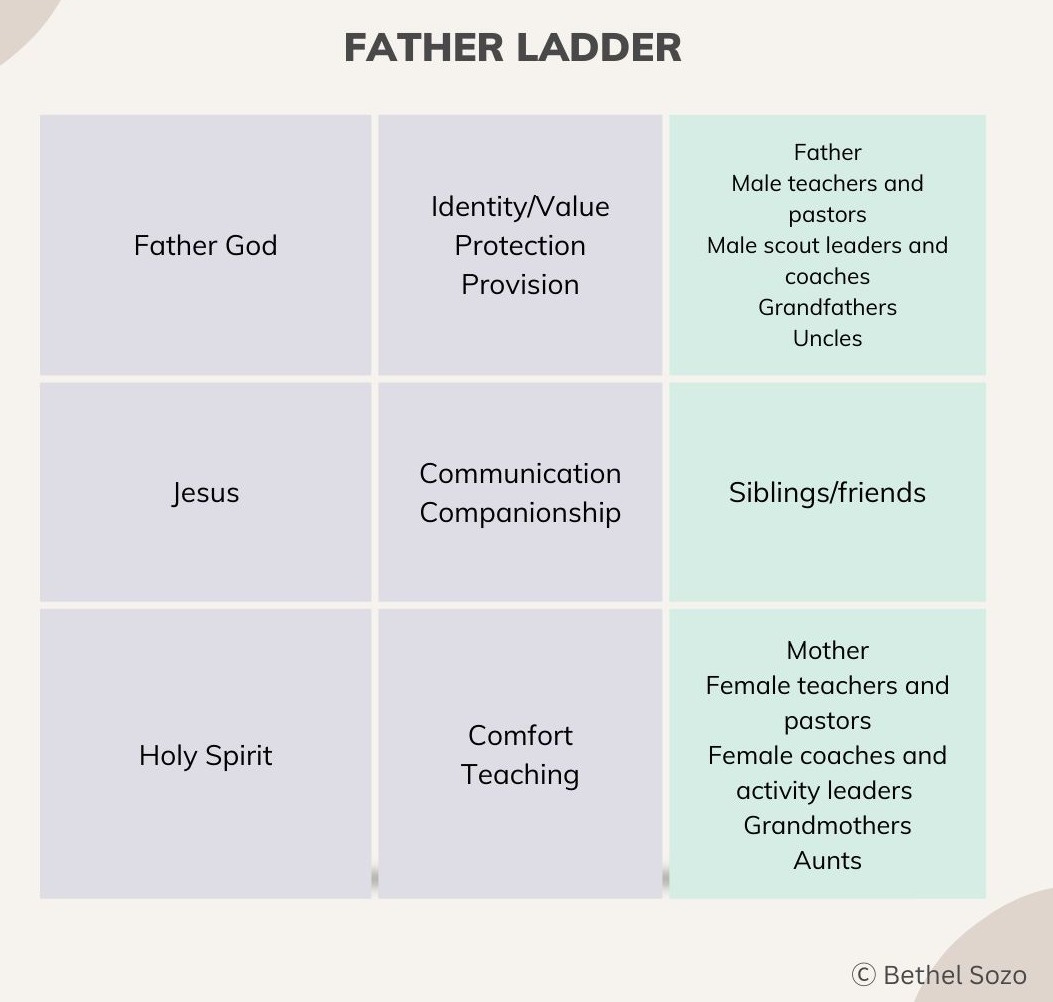
Instead of simply telling their clients to “go to God” to get their needs met, Sozo practitioners tell them to go to whichever Person of the Blessed Trinity corresponds to their need:
Once people can see how Father God, Jesus, and the Holy Spirit will meet their needs, they can forgive their friends and family members who failed to provide, protect, or speak identity into their lives. Clients can then go to Father God, Jesus, or the Holy Spirit to get their needs met.
In practice, a Sozo session involves a “sozoer,” who leads the session, the “sozoee,” and a notetaker or “scribe” who remains silent and takes notes. Before the session begins, the sozoee signs a form releasing the Sozo team from all liability. During the session, the sozoee is instructed to keep their eyes closed and respond to the promptings of the sozoer.
Using the Father Ladder, the sozoer guides the sozoee to identify problems relating to individual Persons of the Trinity. Do you feel that “Father God” is cold and distant? You need to forgive your earthly father for not being close to you. The sozoer may say something like,
Repeat after me: “I forgive my earthly father for being distant, for not wanting to be near me, and for not creating a space for me to feel safe or accepted. I renounce the lie that Father God does not want me close and does not have a safe place for me.”
In similar fashion, if you are resentful that your siblings got more attention from your parents than you, seek healing of your relationship with Jesus. If your mother never showed you affection, seek healing of your relationship with the Holy Spirit.
Sozoees are encouraged to enter into a “dialogue” with the Godhead, posing questions first to “Father God,” then to Jesus, then to the Holy Spirit. The Sozo model assumes that one may receive different answers to the same question, depending on which one is addressed.
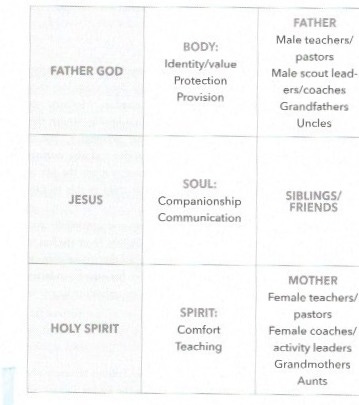
Sozo also attempts to correlate the three Persons of the Trinity to a threefold division of the human person into body, soul, and spirit, illustrated by this table:
As noted above, Bethel’s version of Sozo is practiced all over the world. There are also many groups not connected with Bethel who teach the Sozo approach without using the word “sozo,” as seen in this video.
We can find non-Catholic Christians who offer strong critiques of Sozo’s theory and practice, calling it unbiblical and dangerous. The Reverend Stephen Parsons deftly identifies other problems with Sozo:
The separation of soul and spirit is simplistic and doesn’t do justice to biblical concepts; the family roles are stereotyped. The division between members of the Trinity is pursued to the extent that they will ask the same question of all three Persons, expecting different answers. This is a version of the Modalist heresy. Yet these concepts are at the heart of what B[ethel] S[ozo] believe and what they do.
For those not familiar with the Modalist heresy, modalism assumes that the terms Father, Son, and Holy Spirit are only different ways of naming different characteristics of the one God. Sozo’s assumptions about how one relates to the different “members” of the Trinity point to a form of modalism unknown to the ancients. Sozo practitioners seem to understand the three divine Persons as three different “people” with whom one cultivates relationships. This is very different from the traditional Catholic idea that we pray to the Father through the Son in the Holy Spirit. At times Sozo practitioners make it sound like as if one should pray to three different gods. If you don’t get what you ask for from the first “member” you talk to, or if you’re not feeling a positive result, move on to the next Person in the Father Ladder.
While I wrote “Person,” it is not without importance that Sozo practitioners ignore traditional theological terms about the Trinity, saying “member” instead of “Person” and referring to “Jesus” instead of “Son.” A further theological problem is that the assumptions behind Sozo go against the traditional teaching of orthodox Christianity that actions of God in respect to creation ("ad extra”) should be attributed to the Trinity as One, not to one or two Persons only. St. Gregory of Nyssa put it this way:
The principle of the power of oversight and beholding in Father, Son, and Holy Spirit is one. …No activity is divided to the hypostases [i.e. Persons], completed individually by each and set apart without being viewed together. All providence, care, and attention of all, both of things in the sensible creation and of things of the heavenly nature - and the preservation of what exists, the correction of things out of tune, the teaching of things set right - is one and not three, kept straight by the Holy Trinity. It is not severed into three, according to the number of Persons beheld in faith, so that each activity, viewed by itself, is of the Father, alone or of the Only-Begotten individually or of the Holy Spirit separately (emph. added).
Catholics and Sozo
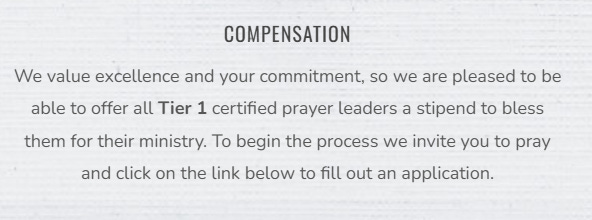
Considering the serious theological errors contained in the theory and practice of Sozo, we would expect all Catholics to avoid the practice. Some Catholics have warned against it; for example, the Catholic organization Women of Grace published an article called Stay Away from Sozo Prayer! Other Catholics, however, notably those involved with the Encounter School of Ministry (ESM), are promoting, teaching, and practicing Sozo. They avoid calling the practice by that name, and instead speak of an “inner healing and freedom” ministry. Certified leaders who have completed training through ESM may receive financial compensation “to bless them for their ministry.”
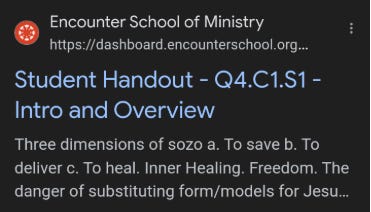
In its teaching materials, ESM gives the same threefold definition of “sozo” that Dawna De Silva does:
ESM follows the outline of Bethel’s Sozo ministry that assumes a correlation between relationships to family members and relationships to the Persons of the Trinity.
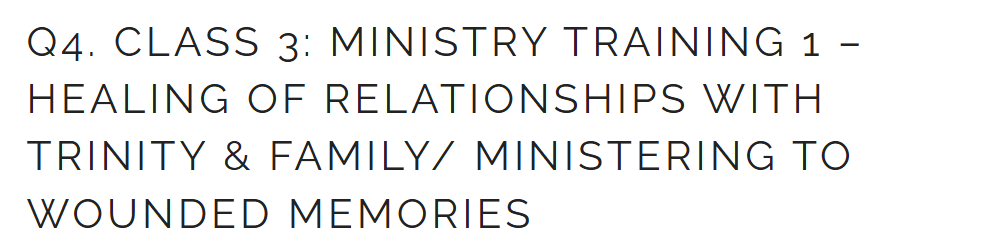
ESM teaches its students that God wants to heal our most important relationships, those with God himself and our family of origin. “The most important relationship a person can have is with God the Father, Jesus, and Holy Spirit. On Earth, the most foundational relationships we have are with our Father, mother, and siblings.” Students are presented with a tool to help them connect a human person “with each member of the Trinity in a personal encounter and then focus on having them ask specific questions to each person to start the inner healing process.” Like Bethel, ESM invites the client to “have a dialogue with each member of the Holy Trinity” which will show the client how they need to forgive members of their family.
A person who participated in ESM’s inner healing and freedom ministry says, “Healing Relationship with Trinity Tool helped me identify and heal the relationship with my own Father who was not able to give me the love I needed as a child. In turn this helped establish a loving relationship with God Father.” This language underscores how closely ESM follows the Sozo model.
Even though ESM has clearly copied Sozo as it is practiced by Bethel and others, along with the theological presuppositions behind it, it avoids use of the “brand name.” This re-branding does not remove the very real problems with what they are doing and teaching. In an earlier post, I wrote, “ESM also recommends Sozo healing and teaches the faulty Trinitarian theology that goes with it.” In response, someone from ESM told me that they do not teach Sozo at all, because they are aware of its defective trinitarian theology. In the light of the facts I have presented here, this statement seems untenable.
Conclusion
Faithful Reader, stay away from Sozo! Attempting to improve one’s relationship with God through a journey into one’s wounded inner child, under the guidance of people with poor theological training who are absolved from all liability, is not a great idea. This is not one of the means the Son established to continue his saving work on earth.
The traditional Christian theology of the Trinity, which Catholics hold in common with Orthodox Christians and Protestants, was developed to safeguard biblical truths about the nature of God and our relationship with him as his adopted children. The great 19th century theologian, Matthias Scheeben, in his monumental work Nature and Grace, spoke of the effects of adoptive sonship in these words: “supernature makes the soul a perfect image of God and of the Trinity; this is not a product of nature.” This brief statement helps us see the central flaw of Sozo. In the Christian understanding, the soul of the Christian is united to the undivided Trinity. This is not a work of nature, but of grace. If I have been baptized in the name of the lifegiving Trinity, bad things that happened to me on a natural level, such as an inadequate or flawed relationship with my human father, do not prejudice my relationship with the blessed Trinity or God the Father. A natural occurrence cannot make my bond with one of the Divine persons weaker than my bond with the other two. Sin alone can this destroy.
Btw NAR getting more attention :
https://x.com/villgecrazylady/status/1985381527161901105?s=46&t=WmEl9maKkk80IpfW5j5CoQ
I also addressed this topic in Chapter 6 my new book, Departure from the Faith, and fully agree with your findings regarding Sozo "inner healing" practices which is going by various other names these days in a seeming effort to deceive by pretending not to be affiliated with the Bethel practice. Definitely stay away!